Kigezi Homeof Children with Disabilities
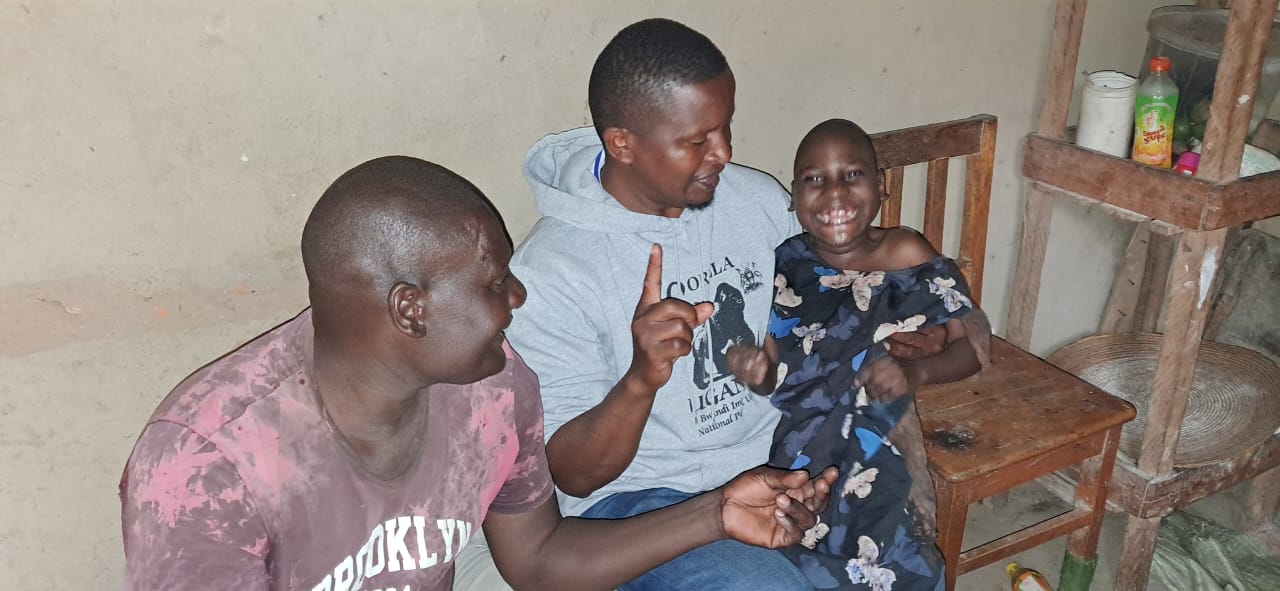
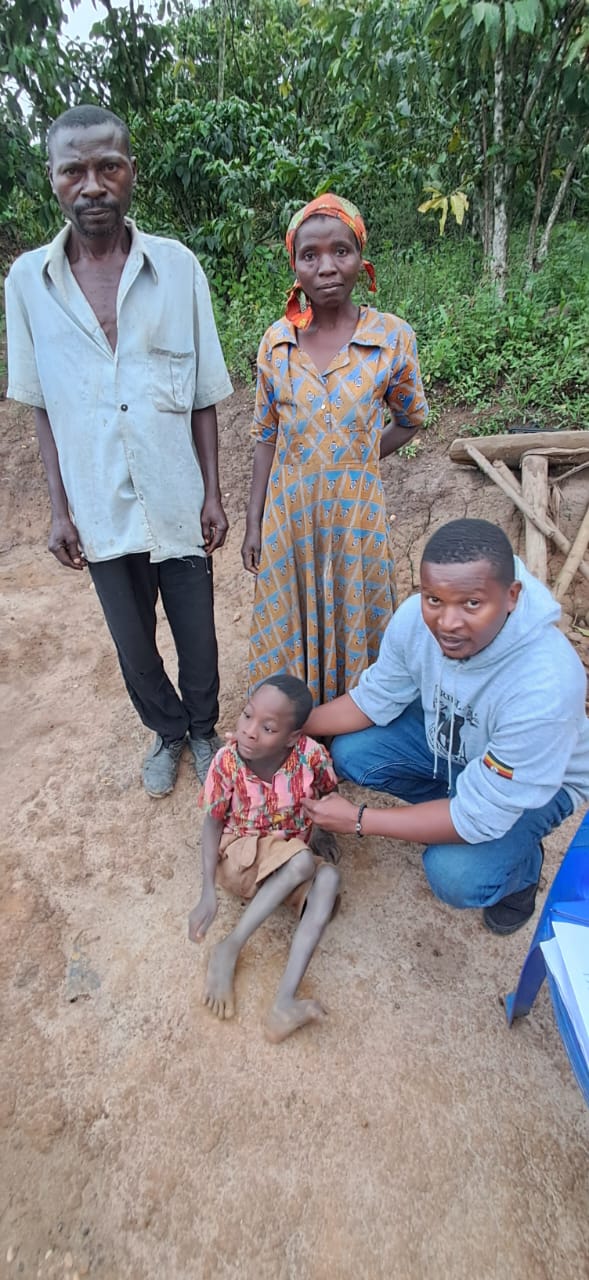
Asiimwe Andrew and the Kigezi Home team with a child and family during a home visit
KIGEZI HOME OF CHILDREN WITH DISABILITIES

Soaring the un seen dreams

Our DREAM/VISION: A society free from all types of discrimination, stigma where children with disability have the opportunity to realize their potentiality.

What we are doing now

We have been providing basic needs and relief items to a few children with disabilities in Kanungu.

Help us reach more children
Who we are

Working with families that have children with disabilities

Kigezi Home of children with disabilities will work with families that have children with l disabilities. KHCD will strive to bring about a positive change in the quality of life of children with disabilities.

This organization is an approach to guide actions and interaction of parents, guardians, society to transform and reorient discrimination/stigma to effectively and sustainably support disabled children in kigezi sub region.

About us
A Kigezi Home visit with a child and family
Vision

Our DREAM/VISION: A society free from all types of discrimination, stigma where children with disability have the opportunity to realize their potentiality.

Mission

Our MISSION is to empower children with disabilities and their families free from discrimination, stigma illiteracy and social injustice.

What we do

Care, learning and a change of mindset

Rehabilitation & physiotherapyHealth educationAdvocacy on disabilityMindset changeFormal educationVocational training
01

To build sustainable self esteem in the disabled children, families and communities.
02

To reduce discrimination and stigma in children with disabilities and their families

03

To collaborate with the Ugandan government, local communities, friends, partners and donors to raise the living standards of the disabled children

See our proposed activities

Why it matters

Many children are still hidden away

14.6%hearing difficulty
32.9%difficulty concentrating or remembering
26.1%difficulty walking

Studies show that 14.6% of people in kigezi region are reported to have a hearing difficulty,32.9% have difficulty in concentrating or remembering,26.1% have difficulty in walking.

Some of the Kigezi sub region parents are not exposed, they believe its witchcraft or a curse when any of their children is disabled. so, they just keep them locked at home. They don’t believe these children also have dreams and ambitions in their lives.

Supporting a child is a shared responsibility.

Partner with us, volunteer your skills or help a family reach the care they need.

Get involved
About us

KIGEZI HOME OF CHILDREN WITH DISABILITIES

Soaring the un seen dreams

Our dream & mission

Who we are

A project proposal to enhance resilience of the disabled children through starting an entity that contains prevention through rehabilitation and physiotherapy services, health education, advocacy on disability, (mindset change), formal education, vocational training, in Kanungu district Uganda. (KIGEZI HOME OF CHILDREN WITH DISABILITIES).

Kigezi Home of children with disabilities will work with families that have children with l disabilities. KHCD will strive to bring about a positive change in the quality of life of children with disabilities.

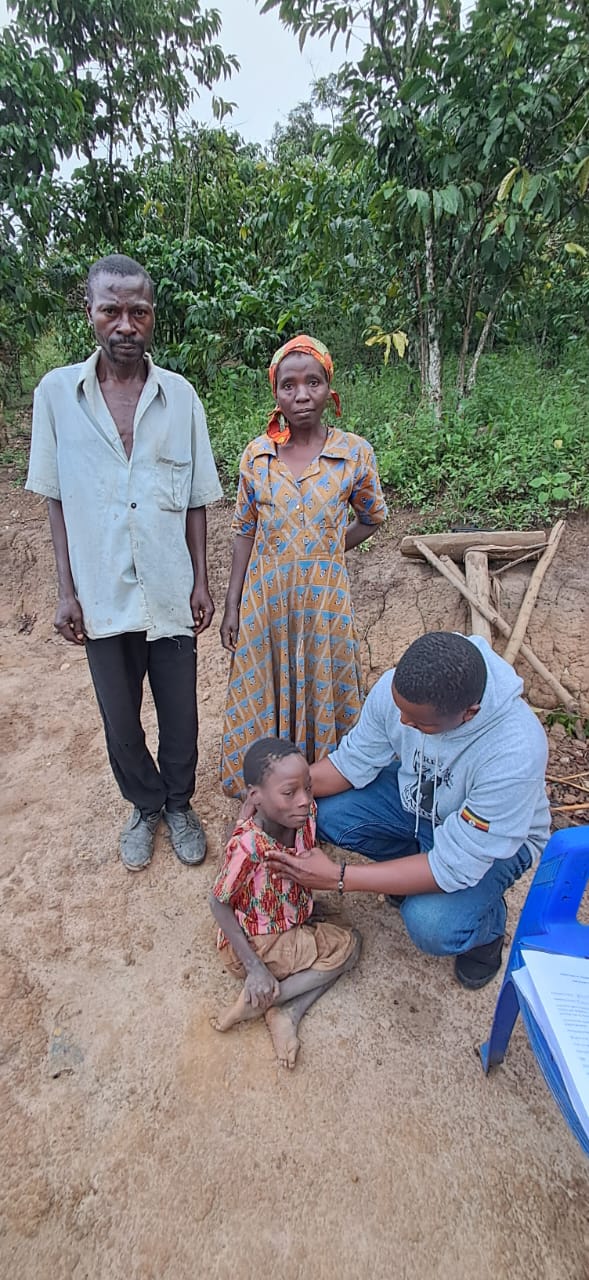
Kigezi Home team meeting a family at their home
Vision

Our DREAM/VISION: A society free from all types of discrimination, stigma where children with disability have the opportunity to realize their potentiality.

Mission

Our MISSION is to empower children with disabilities and their families free from discrimination, stigma illiteracy and social injustice.

Background

1.Executive summary.

Disability refers to a physical or mental condition that limits one’s growth and development. Children with disabilities are estimated to be 8% of the general total population,53.9 % are children and 46.1% are adults in the whole of Uganda. (source: https://www.unicef.org)

Disability poses a serious threat to the people worldwide, it impacts their livelihood. Studies show that most of the disabled people in developing countries like Uganda are ignored and are always closed up in homes, parents don’t know what to do with them, they associate them with misfortunes and witchcraft majority believe they don’t have bright futures and have no dreams as any other normal human beings.

Studies show that 14.6% of people in kigezi region are reported to have a hearing difficulty,32.9% have difficulty in concentrating or remembering,26.1% have difficulty in walking.

There is an increase in children with disabilities due to the effects of COVID 19, pregnant mothers became malnourished and others couldn’t access antenatal services Kigezi sub region is among the regions in Uganda that pregnant mothers rarely do antenatal services because of lockdown restrictions, others have limited knowledge on what to do when pregnant, what medicine they are supposed to take which in most cases affects unborn babies in vitro.

Some of the Kigezi sub region parents are not exposed, they believe its witchcraft or a curse when any of their children is disabled. so, they just keep them locked at home. They don’t believe these children also have dreams and ambitions in their lives.

The ongoing rise in children with disabilities has been gravely intensified by the COVID-19 pandemic which reduced hospital visits to virtually nil. It has also significantly impacted negatively local community health centers who benefit from people going to hospitals, schools, and the movement of people from urban to rural areas a response to lockdowns has worsened the pregnancy rate and economies.

This organization is an approach to guide actions and interaction of parents, guardians, society to transform and reorient discrimination/stigma to effectively and sustainably support disabled children in kigezi sub region.

Leadership

Our founder

Founder

Asiimwe Andrew

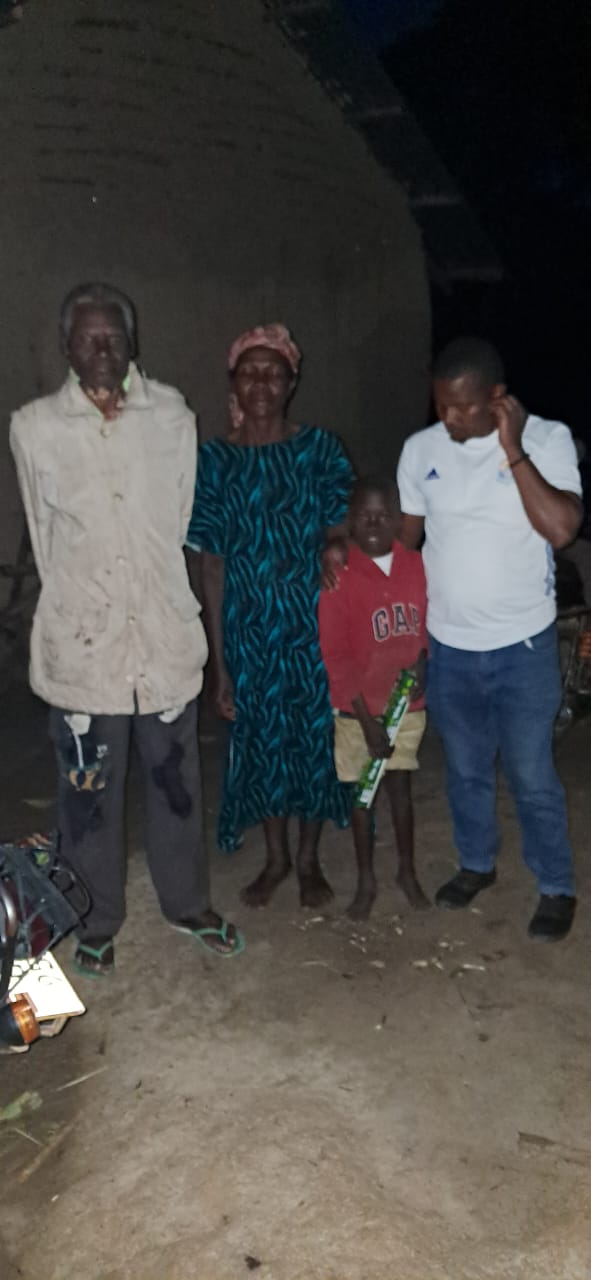
Asiimwe Andrew is the founder of Kigezi Home of Children with Disabilities and visits families together with partner organisations, including the Readied Feet Foundation.

Working together

Partners and collaborators

To collaborate with the Ugandan government, local communities, friends, partners and donors to raise the living standards of the disabled children

Partner with us
Our work

Soaring the un seen dreams

Rehabilitation, education, advocacy and community awareness for children with disabilities in Kanungu district.

What we are doing now

We have been providing basic needs and relief items to a few children with disabilities in Kanungu.

Project proposal

Our proposal

A project proposal to enhance resilience of the disabled children through starting an entity that contains prevention through rehabilitation and physiotherapy services, health education, advocacy on disability, (mindset change), formal education, vocational training, in Kanungu district Uganda. (KIGEZI HOME OF CHILDREN WITH DISABILITIES).

Our goal in the Kigezi sub region is to minimize the current rate of disability in children. The long-term impact of this effort will be to soaring the un seen dreams of these children, fighting stigma amongst them, teaching parents and communities that these children are not cursed and should be loved, motivated and cared for.

Impact

3. PROJECT IMPACT:

This can be achieved by increasing impact on three key priorities:

1

1.Working with the Ugandan government in offering efficient, safe and effective fight towards discrimination of the disabled. The organization will provide ongoing training, physiotherapy, special needs training, essential equipment and assistance in the adaptive management and monitoring of these children and parents plus communities as well as financial support on the ground.

2

2. We have a special focus on building self-esteem to these children with disability, and restoration of hope that specifically target on mind set change, career building how the children interact with other fellows, children being exposed to the outside social world. Doing trainings in art and craft making, practicing in music dance and drama as well as ensuring they meet their dreams. This will be achieved through hiring trained staff for all the above sectors.

3

3.Reducing discrimination and stigma amongst local human communities and disabled children. We also need to innovate with new solutions; consultation with local people has revealed that access to quality medical services is a key driver of conflict. thus, we propose to employ local people as our mobilisers Associated with this, we will undertake ongoing social and health education and awareness raising among our community partners. The organization will have excellent relationships with the government representatives and local communities in the area.

Objectives

2. KHCD OBJECTIVES.

01

To build sustainable self esteem in the disabled children, families and communities.
02

To reduce discrimination and stigma in children with disabilities and their families

03

To collaborate with the Ugandan government, local communities, friends, partners and donors to raise the living standards of the disabled children

Activities

3.Proposed Activities & Impact

ActivityInputExpected out come
1.0 Improved physiotherapy enforcement towards the disabled children1.1.1 well equipped facilities that provide excellent physiotherapy services in the region1.1 Reduce or eliminate pain, minimise chances of surgery, improved balance, prevent very many falls, prevent permanent disability
1.1.2 hiring well trained physiotherapists
1.1.3 disability friendly structures / environment
2.0 serious inclusion of these children through teaching them what other children study, vocational training2.1.1 trainings and workshops for children and their parents2.1 Effective Human- living Mitigation measures reduce between people and disabled children.
3.0 Communities of Kigezi sub region will value the children their support towards disability is improved2.1.2 handling them with courtesy and understanding.
3.1.1 social education and health education awareness3.1 social education and awareness creates positive community behaviour towards disabled children and their parents
3.1.2 Community events (art and craft clubs, showcasing talents and skills acquired)
4.0 Monitoring, Evaluation and Learning of the project ensures effective implementation and delivery of the project outcomes3.1.3 Conduct radio talk shows and adverts about dangers of stigma and benefits of inclusion to local communities
4.0 Monitoring, Evaluation and Learning of the project ensures effective implementation and delivery of the project outcomes4.1.1 Conduct monitoring, Evaluation and Learning is conducted throughout the project period4.1. Monitoring, Evaluation and Learning is conducted throughout the project period successfully

Walk with us.

Support rehabilitation, education and community awareness for children with disabilities.

Contact us
Projects

Stories from our family visits

Real children, real families and the opportunities they deserve.

Desire in the arms of her mother outside their home

Desire’s Story: A Chance to Thrive

Desire Agaba is a 10-year-old girl born on 20 June 2016 to Niwagaba Dickens and Ainembabazi Loy. She is the youngest of four children, all girls, and lives with her family. Desire’s story began with an unexpected tragedy before her birth. During her mother’s final antenatal visit, her parents were involved in a motorcycle accident while travelling to the hospital.

Recounting the experience, Desire’s father, Dickens, described the uncertainty that followed. “My wife and I left home on a motorcycle to go to the hospital. We got into an accident. After several days, I regained consciousness and found myself on a hospital bed. I asked about my wife and was told that she was also admitted. Three days later, I was informed that she had delivered, but the baby was weak,” he recalled.

Desire was born prematurely. According to her mother, she had visible bruises on her shoulder, forehead, and back at birth. The family subsequently faced the challenge of understanding and responding to Desire’s developmental needs. As Desire grew, her family observed that she had difficulty controlling her head. Concerned about her development, they sought medical attention when she was approximately one and a half years old. According to the family, Desire received medical care and subsequently made progress. One significant improvement was her ability to hold her head upright, something she had previously struggled to do. However, accessing continued healthcare and support has not been easy. Financial constraints have prevented the family from returning to the hospital for further assessment and follow-up care. Despite these challenges, Desire’s parents remain committed to providing for her and meeting her daily needs.

“We do what we can,” her mother explained, reflecting the family’s determination to care for their daughter despite their limited resources.

For Desire’s father, caring for his daughter has also meant developing a close bond with her and learning to understand her needs. He explained that he does his best to ensure she is comfortable and has what he can provide. “I make sure she has what she needs. We have developed a strong bond, and I understand what she wants. I try my best to provide for her. She likes soda, and I make sure she gets it whenever I can. That is her share, just as the other children go to school,” he explained.

His words reveal a father’s commitment to his daughter, but they also highlight a difficult reality: Desire is not attending school, and her father fears that she may never have that opportunity. His concern raises an important question about the educational opportunities available to children with disabilities and the support families need to help their children participate in learning.

Desire’s story highlights the challenges families face in accessing healthcare, rehabilitation, and educational opportunities for children with disabilities. Financial constraints can limit access to essential services, leaving families struggling to meet their children’s needs. Every child deserves dignity, inclusion, and an opportunity to learn and develop their abilities. Desire’s circumstances should not determine her future. Appropriate medical assessment, rehabilitation, inclusive education, and family support could improve her quality of life.

Desire deserves the opportunity to reach her full potential. Supporting her is a shared responsibility.

Visiting team.

Asiimwe Andrew. Kigezi Home of Children with Disability

Angello Rutaremwa. Readied Feet Foundation

By;

Angello Rutaremwa,
Public health specialist

Moses greeting a visitor with a fist bump, with his parents standing behind him

A Story of Hope and Possibility

Moses Kayanja was born on 23 February 2013, alongside his twin sister, to Turyakira Herbert and Orishaba Kate. He is the fourth-born in a family of nine children and was born under the guidance of trained healthcare professionals. Recounting his birth, his mother said, “He was born with difficulties. Moses did not cry, and we actually had no hope that he would make it, but by the grace of God, he did.” At just three months old, Moses began experiencing developmental challenges. He gradually lost mobility in his limbs, and even suckling became difficult. His family sought medical attention, but limited resources meant that Moses could only access basic healthcare, without the specialized support he needed.

As the months turned into years, the difference between Moses and his twin sister became increasingly noticeable. While his sister continued to grow and reach developmental milestones, Moses remained unable to walk. He learned to crawl from place to place, relying on this limited mobility to explore his surroundings. He is non-verbal but appears to respond to louder voices. When the time came for his twin sister to begin school, Moses could not join her because of his condition. Despite these challenges, Moses has a beautiful way of expressing himself. During our visit to his family, we were welcomed with joy, and our presence brought excitement to Moses and the entire household. Although he initially resisted getting dressed, he eventually agreed after some gentle encouragement from our team.

One of the most heartwarming moments was discovering that Moses knows how to greet people using his fist, a local gesture known as “okubonga.” He smiles warmly whenever someone greets him this way. His smile, gestures, and responses revealed a young boy with his own unique ways of connecting with the people around him.

Following an assessment by the visiting experts, it was recommended that Moses could benefit from professional physiotherapy and occupational therapy. With appropriate assessment, rehabilitation, and continued support, he may improve his mobility, develop greater independence in daily activities, and participate more fully in family and community life. When the team shared the good news that Moses could make progress in life, a smile appeared on his mother’s face as she recounted,

“Obwe, Moses nawe nabaasa kwemerera?” The father interjected, “Mwebare kutugunywa mazima, itwe twabire twamurugireho imwe Ruhanga niwe yabareta mazima!” This literally means, “Are you telling us that Moses can stand? We had already given up on him. Thank you for your good counsel; we believe you are God-sent.”

Moses's story is a reminder that disability should never define a child's potential. Behind his physical limitations is a boy who deserves dignity, care, inclusion, and an opportunity to thrive. With access to appropriate rehabilitation services, assistive support where needed, and a family and community committed to his well-being, Moses deserves the chance to reach his fullest potential.

His journey calls for more than sympathy. It calls for action, inclusion, and a commitment to ensuring that children with disabilities are not left behind.

Visiting team.

Asiimwe Andrew. Kigezi Home of Children with Disability

Angello Rutaremwa. Readied Feet Foundation

By;

Angello Rutaremwa,
Public health specialist

Help us reach the next child.

Talk to us about supporting rehabilitation, education or family visits.

Contact us
Contact us

Let’s talk

Questions, partnerships, volunteering or support for a child. We would be glad to hear from you.

Get in touch

Write to us on WhatsApp and a member of the team will reply as soon as possible.

  • LocationKanungu district, Kigezi sub region, Uganda
  • Phone / WhatsApp+256 782 855 803
  • FounderAsiimwe Andrew

Follow us

Your message opens in WhatsApp, ready to send to +256 782 855 803.